

Why a video-first approach helps scientists and naturalists
Video changes how we learn about animals. A still photo can show shape and color, sure — but a well-shot cranberry bog spiders video captures movement, behavior, and interaction in a way that text or photos can’t. For ecologists, motion reveals hunting technique, escape responses during flooding, mating dances, and maternal care that are otherwise invisible. If you’re studying wetland food webs or predator-prey dynamics, a few minutes of slow-motion footage can be as informative as hours of field notes.
Quick snapshot: What is a cranberry bog?
Cranberry bogs are wetland agricultural systems (or wild wetlands) dominated by bog-loving plants and acidic, peat-rich soils. They’re the red, jewel-like water bodies you see in fall harvest photos — but beneath that glossy surface lives a complex microhabitat: low vegetation, pockets of standing water, and a dense community of invertebrates. Cranberry bog spiders are the arthropod side-characters that quietly keep pests in check while surviving an environment that floods periodically.
Meet the cast: Spider families you’ll see in bog footage
When you scan a cranberry bog clip you’ll often spot a small cast of familiar spider families—each playing a different ecological role. Surveys of wild and abandoned cranberry bogs show a mixture of hunting and web-building families in these habitats.
Lycosidae — the wolf spiders (hunters on the ground)
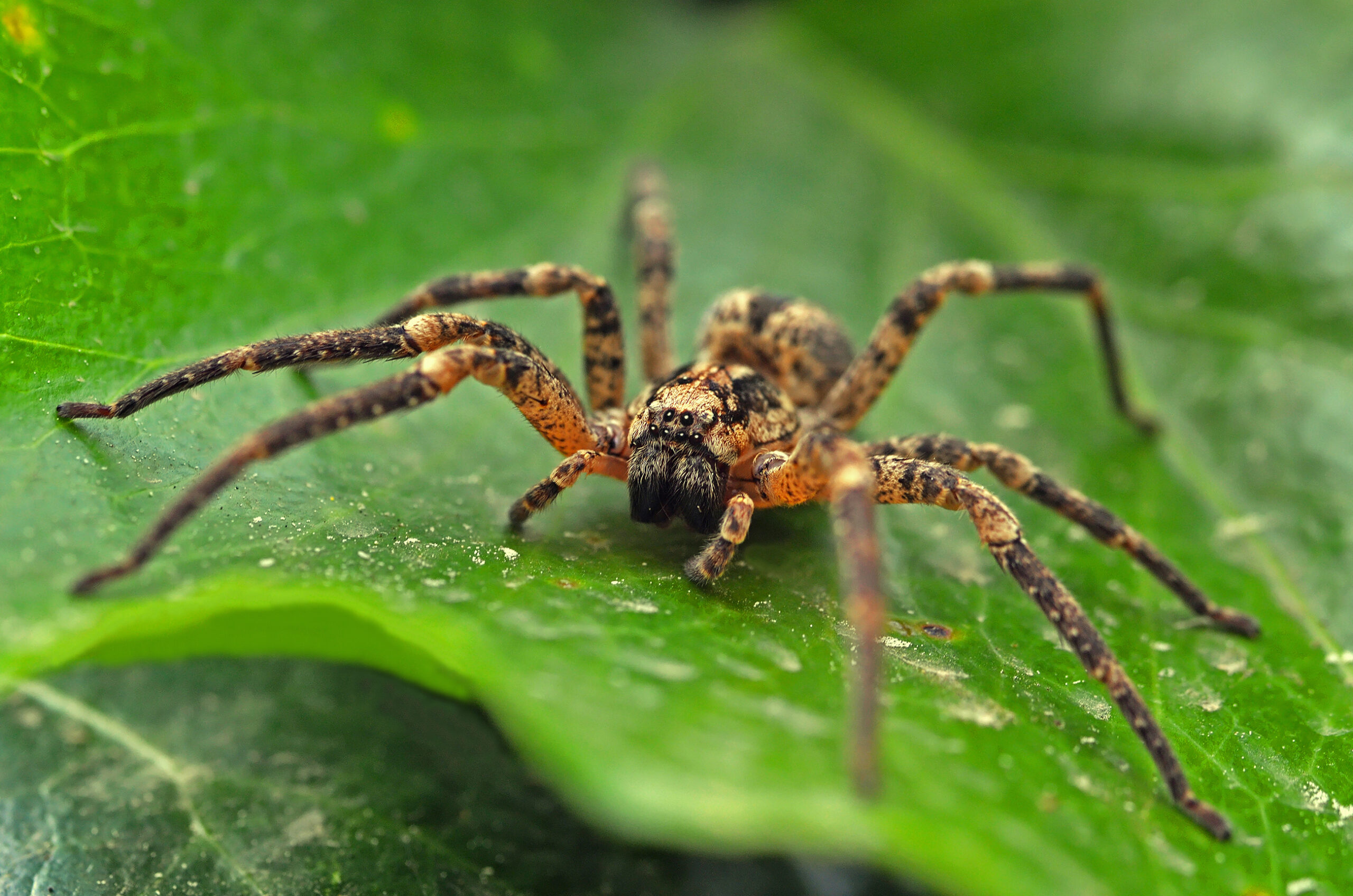
Wolf spiders are ground-hunting predators: fast, low to the substrate, and built to chase. They don’t spin capture webs; instead they hunt by sight and speed. In video, look for quick bursts of motion across sphagnum, under runners, and the iconic mother-with-young stance (spiderlings riding on mom’s back).
Pisauridae & Dolomedes — fishing and nursery-web spiders (water-capable)
Fishing spiders (Dolomedes and relatives) are semi-aquatic specialists that can hunt at the water’s edge or even run across the surface. In footage, they’re the ones that’ll paddle, pause, and launch for prey — and sometimes dive. Their adaptations for water locomotion make them fascinating slow-motion subjects.
Araneidae, Salticidae, Thomisidae — orb-weavers, jumpers and crab spiders
Orb-weavers make webs in low shrubs and can be seen with small, often tattered webs between bog plants; jumping spiders (Salticidae) are little drama queens — quick, curious, with dynamic courtship displays; crab spiders (Thomisidae) sit ambush-style on flowers and leaves. Together these families create layers of predation across the bog’s vertical space.
Adaptations that let spiders thrive in wet, acidic bogs
Bog life is tough — fluctuating water levels, acidic substrates, and an intense seasonal pulse during harvest. Spiders in these habitats show neat adaptations for living on the edge between dry and wet.
Hydrophobic hairs and walking on water
One of the coolest things you’ll observe on video is how certain spiders exploit surface tension. Many semi-aquatic spiders have dense, waxy hairs that trap air and repel water; this keeps legs dry and allows spiders to stand, scuttle, or even sprint across the water surface. Researchers have documented the biomechanics of this behavior and tied it to hair density and leg mechanics — the physics is gorgeous when you slow it down.
Camouflage, hunting strategies, and seasonal timing
Bog spiders are often cryptic in color and posture. Some hug the moss and blend; others freeze to ambush insects on flowers. Seasonal timing matters too — many species synchronize life stages to insect emergence, meaning your video in August will tell a very different story than one in October.
Behavior highlights to watch for in a cranberry bog spiders video
Video gives you a behavioral checklist. Here are the top things to watch, frame by frame:
Hunting, courtship, and maternal care (spider mom moments)
Does a spider stalk and pounce, or wait in a web? Do males perform a leg-waving courtship to avoid being eaten? Do you see maternal care — egg sacs, females carrying sacks, spiderlings on a mother’s back? These moments reveal life-history strategies and are golden for ethological notes.
Flood-time survival during cranberry harvest
Harvest flooding is when bogs are inundated for berry collection. Videos from harvest time often show spiders riding vegetation, clinging to stems, or using hydrophobic tricks to avoid drowning. Some species temporarily relocate; others ride the water surface. The footage can be both dramatic and informative about resilience.
Ecological role: pest control, food-web links and bioindicator value
Spiders are not just curiosities — they’re active managers of insect communities. In commercial and wild bogs alike, predatory spiders reduce herbivore loads on cranberry vines and can act as an affordable, sustainable pest-control layer. That has practical implications for integrated pest management: some growers even view spiders as allies and design habitat features to support them.
How to film cranberry bog spiders: a field-video guide for biologists
Want to create a high-value “cranberry bog spiders video” that researchers and hobbyists will love? Here’s a compact guide.
Equipment essentials (camera, macro lens, lighting, stabilization)
- Camera: any modern mirrorless or even a smartphone with a good macro clip-on lens will work.
- Lens: a 1:1 macro or a high-quality close-focus lens to capture fine hairs and eye shine.
- Lighting: a small LED panel with diffuser; avoid harsh shadows that disturb the spider.
- Stabilization: a small tripod, monopod, or gimbal for smooth pans and close-ups.
Shot list & framing: the micro moments every video should capture
- Establishing shot of the bog (context).
- Close-up of a spider’s movement (legs, hairs, eye retinas).
- Hunting sequence (approach, strike, handling prey).
- Flood interaction (legs on water surface, climbing stems).
- Maternal behavior (egg sac, spiderlings).
Capture at 60–120 fps for quick strikes; use 24–30 fps for longer, cinematic clips.
Safety & ethics (for you, the spiders, and the bog habitat)
Keep impact minimal: don’t trample vegetation for a shot, avoid moving egg sacs or individuals unless part of an approved study, and sanitize boots between bogs to prevent pathogen transfer. Remember: your camera is a tool for observation, not a weapon.
From video to data: analyzing footage for ecology research
A video can be a dataset. Here’s how to turn clips into usable observations.
What to annotate: species, behavior, microhabitat, timestamps
Use simple spreadsheets or software like BORIS, Solomon Coder, or even timestamped Google Sheets. Log species (or morphotype), behavior (hunting, mating, resting), microhabitat (sphagnum, stem, water surface), and environmental conditions (temp, time, flood state). If you’re unsure of species, label as “Lycosid sp. 1” etc.
Citizen science and sharing your clips responsibly
Platforms like iNaturalist welcome observations — but upload responsibly. Include date, location (approximate if sensitive), and habitat notes. For agricultural sites, get permission from growers. Openly shared videos power education, and—when aggregated—can reveal distribution and phenology patterns.
Conservation concerns and how videos can help protect bogs
Cranberry bogs and similar wetlands face pressures: drainage, conversion, pesticide regimes, and invasive plants. Video is a persuasive conservation tool — footage of abundant spider life and obvious pest-control benefits can help convince land managers to adopt spider-friendly practices (reduced pesticide use, habitat refugia). Videos also make excellent outreach material for schools and extension programs.
Practical note on human safety: are bog spiders dangerous?
Short answer: mostly no. Wolf spiders and other common bog species will bite if handled or trapped, but bites typically produce only mild reactions — a red bump, some pain, and localized swelling — and rarely require medical attention. That said, if someone has a severe allergic reaction, they should seek care. For fieldworkers: gloves and boots make both work and peace of mind easier.
Conclusion — why every ecology student should watch (and make) cranberry bog spiders videos
A “cranberry bog spiders video” is more than a neat nature clip — it’s a window into adaptation, behavior, and ecosystem service. For researchers, it’s a data-rich medium; for students, it’s a hands-on lab without a microscope; for growers, it’s evidence that biodiversity can do economic work. So next time you see a red bog photo, imagine the micro-dramas playing out among the moss and stems — and consider pointing a camera at them.
5 Unique FAQs
Q1: What species are most commonly called “cranberry bog spiders”?
A1: There’s no single species called that; the term refers to a suite of spiders (wolf spiders, fishing spiders like Dolomedes, orb-weavers, jumping spiders) commonly found in bog habitats. Surveys list these families repeatedly in cranberry bog studies.
Q2: Can videos help quantify how many spiders are in a bog?
A2: Yes — repeated standardized video transects, combined with frame-by-frame counts and calibration against pitfall or sweep-net data, can estimate relative abundance and activity patterns. Video is especially useful for behavioral indices (hunting rate, mating displays).
Q3: Will filming disturb spiders or harm the bog?
A3: Minimal-impact filming — staying on boardwalks, avoiding trampling, and using non-invasive lighting — typically does not harm spiders. Get landowner permission and follow local biosecurity rules (clean boots between sites).
Q4: How does flooding during harvest affect spider communities?
A4: Flooding is disruptive but many spiders persist by using hydrophobic hairs to ride the surface, climbing to vegetation, or relocating. Some growers find that the presence of spiders helps reduce pest outbreaks, so they avoid broad-spectrum pesticides that would eliminate these predators.
Q5: Where should I upload or share my cranberry bog spider videos for scientific use?
A5: iNaturalist is great for identifications and distribution data; YouTube or Vimeo for longer educational clips (link to a timestamped specimen sheet); and institutional repositories or university collections for formally curated data. Always include metadata: date, location, method, and any permits.
-
Discover the fascinating world of wolf spiders and their hidden role in bog ecosystems. 🌿🕷️
-
Learn how these unique predators balance nature’s wetland food web.